

Key Takeaways
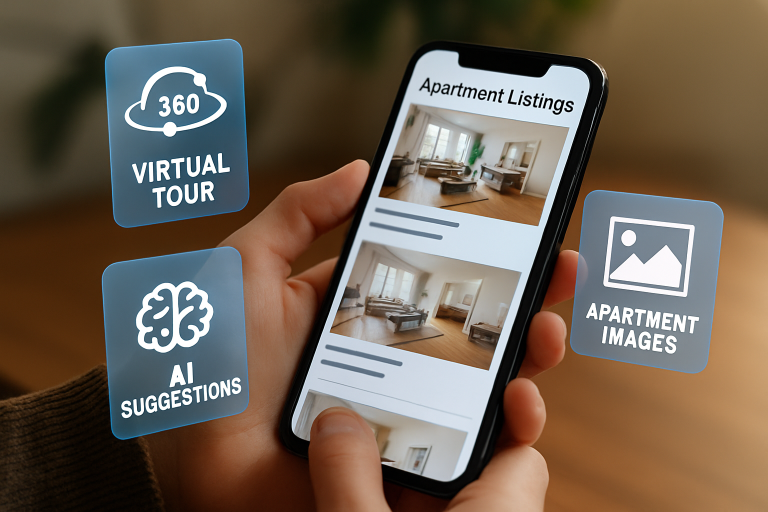
- Virtual tours and 3D modeling allow prospective renters to explore properties remotely.
- AI-powered tools provide personalized apartment recommendations based on user preferences.
- Mobile applications have become essential in the apartment search process.
- Augmented reality (AR) enhances the visualization of potential living spaces.
- Digital platforms offer comprehensive property information, including high-resolution images and detailed descriptions.
The days of flipping through newspaper classifieds and traversing neighborhoods on foot in search of a new apartment are fading fast. Today, apartment hunting has become a far more dynamic and streamlined process, heavily shaped by a variety of digital innovations. From on-demand virtual tours to hyper-personalized recommendations driven by artificial intelligence, technology is fundamentally altering the rental landscape for tenants and landlords alike. New York City NY real estate experts Mirador Real Estate have witnessed this evolution firsthand, helping renters and property owners leverage these tools to achieve better results. With just a few taps on a smartphone, prospective tenants can now browse thousands of listings, explore neighborhoods, and even map out their morning commutes, often without ever stepping outside. The ability to tour apartments remotely, receive targeted recommendations, and visualize potential living spaces helps renters make informed decisions faster and more confidently, opening up new opportunities for people relocating from across the country or even internationally. These changes are especially significant in markets like New York City, where fast-paced lifestyles and competitive rental conditions demand efficiency and flexibility. As technology continues to mature, the apartment-hunting process becomes increasingly accessible, transparent, and user-friendly for everyone involved. Below, we explore how the most important technological advances are transforming every stage of searching for and securing a new apartment, whether you’re moving across town or across the globe.
Virtual Tours: Exploring Apartments from Anywhere
One of the most impactful developments in apartment hunting is the rise of virtual tours. Powered by 3D modeling, high-resolution imaging, and virtual reality (VR), these tours let prospective renters “walk through” a property remotely. Instead of scheduling multiple in-person visits that may not fit a busy schedule, renters can analyze the layouts, finishes, and spatial flow of numerous properties in an afternoon, even if they’re still hundreds of miles away. According to The New York Times, these tools have become particularly vital during periods of high demand and limited mobility, such as during the recent global pandemic.
AI-Powered Recommendations: Personalized Apartment Matches
Apartment search platforms increasingly use artificial intelligence to suggest listings that closely align with a renter’s unique needs including location preferences, budget, desired amenities, and even lifestyle patterns. These AI engines sift through thousands of data points to identify the best possible matches, dramatically reducing the time renters spend scrolling through irrelevant options. The net result is a far more efficient and targeted search experience, enabling users to discover apartments they might otherwise have overlooked.
Mobile Applications: Apartment Hunting on the Go
Mobile apps have become the heart of the modern apartment hunt. They provide instant access to new listings, allow users to customize search criteria, and offer on-the-go support for setting up viewing appointments or submitting applications. Push notifications alert renters the moment a new property within their preferences is listed, which is invaluable in competitive rental markets. Platforms like Zillow and StreetEasy have set the benchmark, providing rich databases, up-to-date market insights, and integrated chat features for seamless communication between renters and landlords.
Augmented Reality: Visualizing Your Future Home
Whereas virtual tours help renters explore the actual layout and fixtures of an apartment, augmented reality (AR) adds another dimension by enabling users to digitally “stage” a property. Through AR features embedded in apps, renters can determine whether their existing furniture fits in the new space, experiment with different decorating schemes, and even assess potential renovation ideas, all from their mobile device or computer. This innovation empowers renters to make decisions with heightened confidence and foresight.
Comprehensive Digital Platforms: All-in-One Resources
Modern rental platforms combine a wealth of information in one convenient location, offering everything from high-resolution images and video walkthroughs to neighborhood guides and public transportation details. Users can compare multiple listings side-by-side, review feedback from previous tenants, and investigate local schools, dining options, and parks. This level of detail provides a holistic context for decision-making and helps renters find an apartment that meets both their immediate needs and long-term goals. Resources such as The Wall Street Journal’s Real Estate section offer industry trends and in-depth market analysis, supporting even more informed choices.
Conclusion
The integration of advanced technology into the apartment hunting process is both inevitable and highly beneficial. Today’s renters enjoy a suite of tools that make the journey more efficient, personalized, and immersive than ever before. By embracing these digital resources, tenants and landlords can navigate the rental market with greater confidence and success.
