

Key Takeaways
- Prompt injury reporting ensures fast care, prevents complications, and improves workplace safety.
- Accurate documentation supports legal compliance and facilitates the processing of insurance or compensation claims smoothly.
- Employers must provide clear reporting policies, proper training, and maintain detailed incident records.
- Employees have the right to report injuries without fear of retaliation and should report them promptly, providing accurate details.
- Following proper steps—notification, medical evaluation, documentation, and recordkeeping—helps ensure effective reporting.
- Delays, incomplete information, and failure to follow procedures can lead to claim issues and safety risks.
- OSHA requires timely reporting of serious incidents, with penalties for noncompliance.
- A transparent and supportive safety culture reduces risks and strengthens trust throughout the workplace.
Understanding the Importance of Prompt Injury Reporting
Reporting workplace injuries promptly is essential not only for the immediate safety and well-being of the injured employee but also for the overall safety and well-being of all workers in the organization. Timely reporting accelerates access to critical medical care, lowers the risk of complications or worsening injuries, and helps control potential hazards that may remain in the workplace. Fast action allows for the proper isolation of risks and can even prevent similar incidents from happening to others. Moreover, immediate reporting ensures incidents are accurately documented for both legal and insurance purposes, which is vital for establishing a clear record in the event of claims or disputes. In states like California, proper injury reporting is not just encouraged—it’s required by law to protect both businesses and workers. Failure to comply can result in regulatory penalties or issues with insurance claims, which may impact the organization’s standing and financial stability.
Beyond compliance, promptly reporting injuries allows employers to thoroughly investigate the root causes, swiftly resolve hazards, and implement new safety measures as necessary. This proactive approach enhances overall workplace safety and demonstrates a commitment to employee welfare, fostering trust and loyalty between staff and management. This trust is key to a transparent workplace culture where risks are managed collaboratively.
Employer Responsibilities in Injury Reporting
Employers have a fundamental legal and ethical responsibility to provide a safe working environment and to establish effective channels for reporting injuries. This process begins with creating a well-communicated and comprehensive workplace injury reporting policy that outlines every step employees must take after an incident. Employers should ensure that all employees understand these procedures by conducting thorough onboarding and providing ongoing training, supplemented with regular reminders and access to relevant resources. Regular training sessions ensure that both new hires and longtime staff remain familiar with their responsibilities and available reporting options.
Maintaining precise and up-to-date records of every workplace incident, regardless of severity, is also a core employer responsibility. Accurate records help facilitate swift insurance claim processing, prevent legal bottlenecks, and provide crucial evidence in the event of disputes or regulatory inspections. Under the Occupational Safety and Health Administration (OSHA), U.S. businesses are mandated to keep detailed logs of occupational injuries and illnesses. Conducting periodic record audits and ongoing policy reviews are vital practices that keep injury reporting systems functional and current, allowing employers to adapt to any new regulations or emerging safety issues. These measures protect both the business and its workforce from long-term repercussions.
Employee Rights and Responsibilities
Employees are entitled to a workplace where safety is taken seriously, and they have the unequivocal right to report workplace injuries without fear of retaliation or retribution. Laws across the United States expressly prohibit any form of employer retaliation—such as discrimination, demotion, or termination—in response to an injury report. Beyond safeguarding their rights, employees are also responsible for contributing to a safe work environment by remaining vigilant and promptly notifying their supervisors of any workplace injury, regardless of its apparent severity. Quick reporting helps prevent hidden injuries from escalating and facilitates timely intervention.
Employees should also seek immediate professional medical care to protect their health and to establish a formal medical record of the injury, which is often critical in insurance and compensation processes. Providing clear, detailed descriptions regarding how and when the incident occurred, as well as any contributing circumstances, ensures that any resulting investigations or benefits claims proceed smoothly and accurately. Consistent reporting and thorough documentation not only uphold safety standards but can also speed up injury recovery and benefits delivery. Together, these actions contribute to a safer, more informed, and more transparent workplace for everyone.
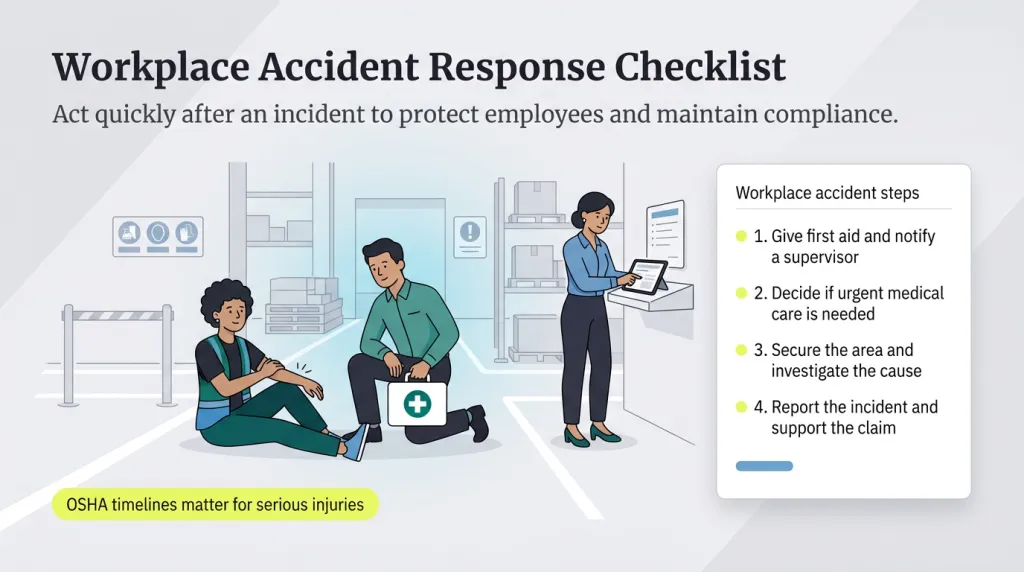
Steps to Report a Workplace Injury
1.Immediate Notification: Inform your supervisor or safety coordinator about the injury as soon as it occurs. Prompt notice is the starting point for the employer’s responsibilities, which include taking steps toward documentation and arranging urgent medical care. Early notification also helps the organization assess any immediate risks to prevent further harm.
2.Medical Evaluation: Consult a qualified healthcare professional for a comprehensive medical evaluation. Proper documentation from a licensed provider is often required for workers’ compensation claims, and a comprehensive evaluation can uncover any previously undetected injuries. This medical record is generally vital for substantiating any future insurance, leave, or compensation requests.
3.Documentation: Complete all necessary accident or injury report forms supplied by your employer. Ensuring all details are factual and precise supports regulatory compliance and thorough investigation. Forms usually require information about the time, location, cause, and witnesses to the incident, all of which are crucial for legal and insurance reviews.
4.Follow-Up: Keep organized records of all paperwork related to the injury, including copies of reports, doctor’s notes, witness statements, and treatment documentation. Comprehensive files make it much easier to answer questions that may arise during claims processing and provide essential proof of the steps taken throughout your recovery process.
Common Mistakes to Avoid
Missteps in the workplace injury reporting process can lead to delays or denials of claims, disruptions in medical care, and even legal liability for employers or employees. Common errors include waiting too long to report injuries—sometimes due to fear or uncertainty—or submitting reports that lack essential details required for a proper investigation. Overlooking organization-specific policies—such as reporting through the wrong channel or neglecting to submit supporting evidence—can also disrupt the claims process and complicate regulatory compliance. Knowing the correct procedures and acting with timely, open communication is the smartest way to minimize risks and avoid unnecessary pitfalls.
Legal Obligations and Compliance
Adhering to legal requirements when reporting workplace injuries is not optional. U.S. employers must follow strict OSHA regulations requiring that all work-related fatalities be reported within eight hours to the relevant authorities, and that any inpatient hospitalizations, amputations, or losses of an eye be reported within 24 hours. These rapid timelines ensure that serious incidents are addressed urgently and transparently, fostering trust and accountability across the workforce.
Failure to meet these standards can have severe consequences, including hefty fines, extended legal proceedings, or damage to an organization’s reputation. Staying informed about current regulatory changes and maintaining compliance are critical operational priorities for every employer—regardless of company size, structure, or industry sector.
Creating a Culture of Safety and Transparency
Creating a sustainable culture of safety goes well beyond standard policies or annual training sessions. Employers should foster open communication by providing regular, engaging safety training for all employees and establishing accessible and straightforward reporting channels. Leadership should lead by example, upholding a commitment to non-punitive injury reporting and actively encouraging workers to report potential hazards or incidents without fear. When employees see that incidents are handled respectfully and proactively, workplace morale improves, and the entire organization benefits from increased transparency and collaboration.
Encouraging injury reporting, responding with empathy to those affected, and offering meaningful support throughout recovery underscores the organization’s true commitment to its people. These actions not only comply with best practices but also deepen employee loyalty and help reduce costly turnover.
Final Thoughts
Effective workplace injury reporting relies on clear policies, a rapid response, and ongoing support from both employers and employees. When organizations commit to implementing best practices, they stay compliant with all relevant regulations, better support their workers through recovery, and create safer environments for everyone. Prioritizing timely reporting and fostering a transparent, supportive safety culture are the cornerstones of reducing workplace incidents, helping to protect the well-being and productivity of the entire workforce.
